

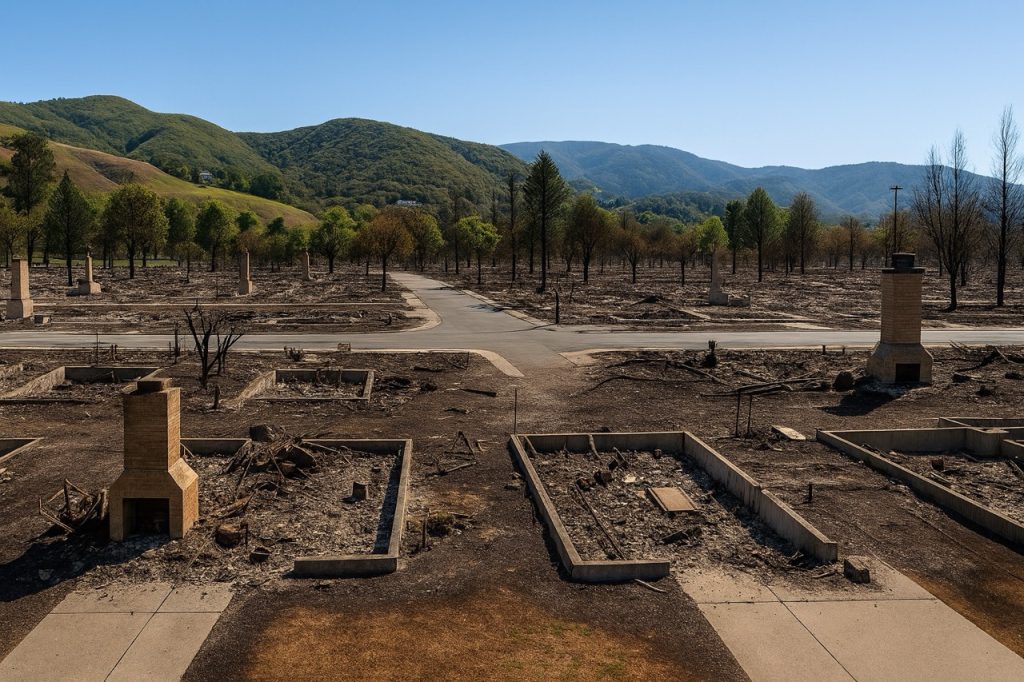
When disaster strikes, what people need isn’t complicated: somewhere safe to stay, a place to rebuild, and the coverage to make them whole. Yet time and time again, those basics fall through. Following record flooding in Florida in 2024, fewer than ten percent of those approved for temporary housing actually got it. Six months after the LA fires, not even one percent of affected properties had a permit to rebuild. When the Marshall Fire tore through Colorado, nearly three-quarters of homeowners were underinsured. These aren’t exceptions — they’re the pattern.
As climate catastrophes accelerate, the U.S. recovery system is buckling. Even FEMA, the backbone of U.S. disaster response, faces cuts so deep that it can’t fully staff its own emergency call centers. Over and over, survivors are left to figure it out on their own, caught in a maze of disconnected agencies, insurance processes, and contractor delays. Ask anyone who’s lived through these nightmares: there is no disaster-response cavalry, and no one to build a bridge from crisis to stability.
Bright Harbor is stepping in to upend this dynamic and create the resilience infrastructure disaster survivors need. Their platform pairs AI tools with trained human advisors to help individuals, businesses, and communities prepare for disasters and bounce back faster, smarter, and stronger when they strike.
Disaster OS.
Bright Harbor is creating an operating system for every stage of climate resilience. Before a disaster hits, Bright Harbor’s AI-powered risk assessment tools suggest targeted interventions to harden communities and boost preparedness. When the worst comes, Bright Harbor delivers the strategic guidance most disaster victims never get, syncing with existing systems — insurance, FEMA, employers, foundations — while filling the painful gaps those systems leave behind.
Steering survivors through the process are disaster experts who build personalized recovery plans, track deadlines and benefits, and help with everything from filing insurance claims to deferring mortgage payments to finding vetted contractors. More than just smart tech, Bright Harbor is a fully staffed port in the storm.
Today, Bright Harbor is announcing $10m in seed funding to reshape disaster resilience across the country. From day one, Lowercarbon has backed businesses that help people, places, and critical infrastructure brace for impact and rebound from climate chaos. So, we’re proud to add Bright Harbor to our roster.
The proof is in the flood zone.
In their first few months, Bright Harbor has already worked with thousands of survivors, helping communities and companies recover from wildfires in Los Angeles, flooding in Texas Hill Country, and hurricanes in the Southeast.
Survivors got more than simply a better process and peace of mind. They got months saved, dollars back, and doors opened. Among many wins: one Bright Harbor client became the first Angeleno to break ground in the Palisades. Another was able to write off an extra $400,000 from an IRS refund thanks to meticulous contents inventory work. Yet another was able to increase their rebuild budget from $1.2m to $3.3m using Bright Harbor’s specialized “House-That-Was” estimate to show the true cost of recovery.
Scaling to meet the mayhem.
The model also works for businesses. Major retailers, entertainment companies, and labor unions now rely on Bright Harbor to protect their people and stabilize operations in the wake of disaster, without asking HR to become recovery managers.
The team is also piloting a government product spearheaded by new hire Pete Gaynor. A former FEMA administrator and Acting Secretary of Homeland Security in Trump’s first term, Pete now leads Bright Harbor’s public sector partnerships, shaping the company’s approach to institutional procurement and long-term coordination with state-level emergency managers.
Do you even need to ask, “Why now?”
Climate catastrophes are hitting harder and more often, yet recovery still runs on faxes, disconnected systems, and overextended caseworkers. Founder Joel Wish saw this gap up close when he helped a friend navigate recovery after the Marshall Fire. A serial entrepreneur and climate investor, he realized the missing piece wasn’t just more funding or faster aid, but an end-to-end system to pull it all together. That idea became Bright Harbor.
There are many ways to help clean up the climate mess, and building infrastructure that fortifies and rebuilds lives is a great way to grab a mop. So much of what we do to help unf**k the planet is at such a massive scale, it can sometimes feel abstract. But Bright Harbor is right there on the literal front lines helping real people when they couldn’t possibly need it more. If that mission speaks to you, know that they’re growing fast and looking for more hands on deck.