

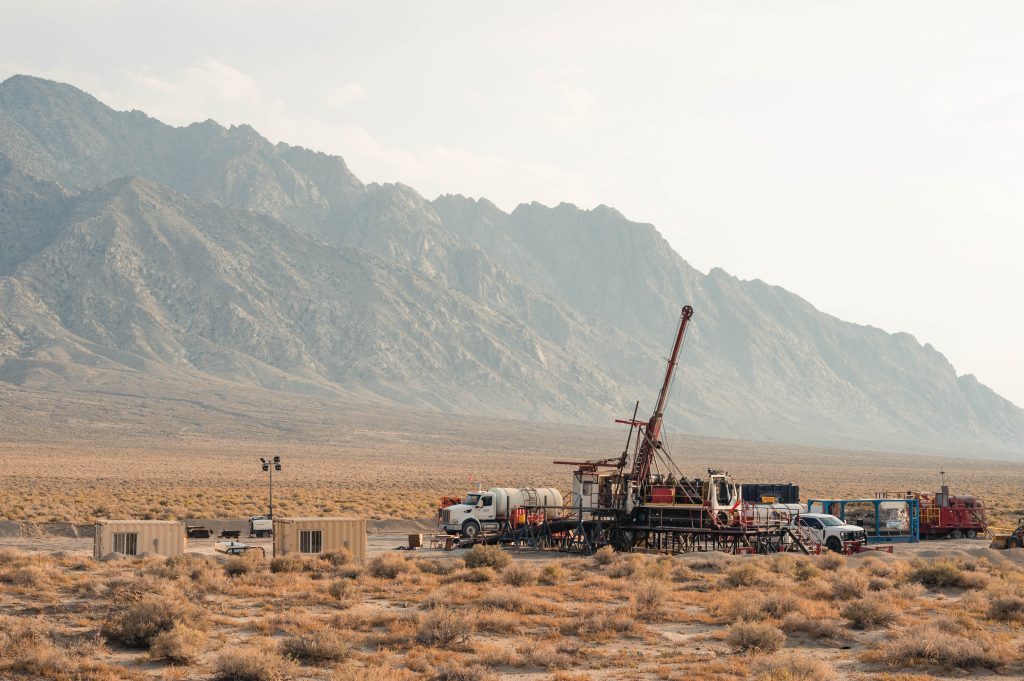
Zanskar’s AI-meets-geoscience approach just pulled off something the geothermal industry hasn’t done in over 30 years: confirm a big, blind resource discovery at a site creatively named, well, Big Blind. This stretch of Nevada desert has no visible steam vents or hot springs, no historic exploration or datasets to work from—not even a suspiciously warm lizard. And yet, Zanskar’s models locked onto a system with the potential to deliver more than 100 MWe to the grid.
For most of its history, geothermal’s story hasn’t looked this easy.
Unless you live next to an active volcano, finding a viable area for geothermal production has been a bit of a ghost hunt: chase wisps of steam and pray that what you find isn’t an apparition. Exploration for geothermal resources is so brutally expensive, and failure is so common that the sector has stalled since the 90s. For what should have been America’s great homegrown, always-on power supply, that failed growth continues to haunt renewable energy developers.
Zanskar is dragging geothermal exploration out of the hunch-and-shovel era and into the age of foundational models, removing the guesswork to discover hidden resources at an unprecedented pace and scale. Forged from a Stanford research group and multiple years spent in the field poking at hot dirt, the company’s founders believed there must be a cheaper and more certain way to tap into the clean, near-infinite supply of energy beneath their feet. Their answer: build a machine learning platform that uses subsurface imaging tools to find overlooked commercial-grade hotspots and turn them into operable power plants.
This Isn’t Luck. It’s a Hot Streak.
Zanskar is on what you might call a heater right now. (See what we did there?)
Their first bet, Lightning Dock in southwest New Mexico, is now the most productive pumped geothermal well in the U.S., resurrected from a field developers had left for dead. Within a single year of acquiring Lightning Dock from Cyrq Energy, Zanskar drilled a deeper, hotter well that is now powering the entire 15 MW plant, all while achieving a 75% reduction in surface infrastructure costs. Those numbers alone turned heads, but a fool-me-once-shame-on-you skeptic could have chalked it up to luck.
Then came Pumpernickel in Nevada, another overlooked site pinpointed by Zanskar’s predictive models and validated with the drill bit. It’s a high-grade system capable of supporting a 20-MWe plant, even though the industry discounted it for years as a minor resource. Two for two.
With the Big Blind discovery, Zanskar is officially en fuego, and their technological edge is undeniable. This is precisely the type of untapped power that conventional geothermal companies have missed. After Zanskar’s models flagged a geothermal anomaly worth investigating, the team headed to the site this past summer and drilled until they hit a ~250°F permeable reservoir just 2,700 feet down—the sort of temperature and flow that old schoolers would assure you wasn’t possible without drilling at least 10,000 feet. Sites like this have been shown to support over 100 MWe of clean, firm power using off-the-shelf technology.
Discovery as a Platform.
Zanskar set out years ago to industrialize the geothermal discovery process, and now, the results speak for themselves. Big Blind marks Zanskar’s third major resource win in a single year (not to mention the ones they haven’t announced publicly yet). With an ever-improving tech stack and a world-leading land portfolio, their pipeline of high-potential sites across the Western US keeps growing.
Their advantage compounds every time their models uncover another hidden hotspot. So the more they drill, the smarter their models get. The smarter the models get, the more resources they find. The more resources they find, the more electrons come online. It’s a geothermal flywheel only Zanskar has the power to unlock.
Geothermal, So Hot Right Now.
Three forces—ancient, inherited, and freshly minted—just snapped into alignment to break geothermal out of its decadal rut. First, Spaceship Earth was launched with a baked-in baseload heat supply that will continue churning long after the continents drift into Pangea 2.0. Second, a hundred-plus years of oil & gas drilling made the US dangerously good at punching holes through the crust. And third, AI just detonated electricity demand, leaving an energy mess tougher to clean than spilled glitter from my daughter’s art project.
This has put geothermal in a unique spot as a renewable power source with rare bipartisan support. Drilling costs are going down. Energy demand is going up. And the molten core isn’t going anywhere. All sparkle, none of the carbon fallout.
Deeper Wells, Bigger Watts.
America’s energy industry has long treated geothermal like a decades-long “situationship”— tons of potential, chronically stalled, and has everyone in the group chat quietly lowering their expectations that it’s going anywhere. But Zanskar isn’t interested in the will-they/won’t-they energy.
Expanding the geothermal playing field is just the start. Zanskar is already pushing into geothermal’s next frontier of hotter rock, deeper systems, and even more efficient, scalable power.
You don’t have to be a geologist to short-circuit conventional wisdom and help unlock gigawatts of clean baseload electrons. Geothermal’s situationship era is over; Zanskar actually knows where the heat is. If you’re not afraid to commit either, then you should join them.