

 Sucking up CO2
Planet-friendly fertilizer farmers love.
Big Picture
Synthetic nitrogen fertilizers led to massive strides in agricultural productivity that now support 8 billion Earthlings. Yet, production and over-application of these chemicals also account for 7% of global GHG emissions, largely in the form of N₂O – a climate change turbocharger with 265x the warming potential of CO₂. The challenge for alternatives is to compete on cost while matching the versatility of synthetic fertilizers across soils and species.
How it Works
Kula rises to the challenge with engineered microbes that fix nitrogen directly from the air. A barrier for other enzyme-based fertilizers is identifying energy sources to keep microbes alive long enough to fix significant quantities of nitrogen. Kula supercharges microbes so that they store energy within their cells, giving their microbes a weeks-long energy source and allowing them to replace up to 100% of synthetic nitrogen.
Unfair Advantage
The result is an organic, non-GMO biofertilizer that can fully replace synthetic nitrogen fertilizer across a broad range of crops, soils, and climates. Did we mention that Kula beats synthetic fertilizer on cost? That means cheaper fertilizer, with greater nutrient density, for farmers anywhere in the world. All while avoiding virtually all of the climate-crushing N₂O runoff.
0.6
Tons of CO₂e
removed per ton of nitrogen produced

BILL BRADY CEO & CO-FOUNDER
Bill has decades of executive experience growing climate tech startups in chemicals and materials manufacturing.
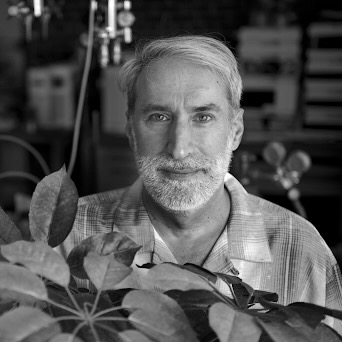
DAN NOCERA DIRECTOR & CO-FOUNDER
Dan is a Harvard Professor of Chemistry and a world pioneer of photochemistry and photophysics.
Kula Bio Raises $50 Million Series A
Business Wire
Record Fertilizer Prices Drive Investors, Farmers to Microbes
The Wall Street Journal
Nitrogen Fertilizer: Solving This Environmental and Humanitarian Crisis
Forbes
Bill Brady, Co-Founder and CEO of Kula Bio
My Climate Journey Podcast