

 Slashing CO2
Trashing Brazil’s waste problem.
Big Picture
Brazil is already the world’s fourth-largest waste producer, and its trash volumes could double by 2030. Yet, just 1% of Brazil’s waste today gets recycled because the country’s waste sector remains highly informal and archaic, relying on illegal landfills that poison workers and communities. The industry is largely privatized, but regulations prevent vertical integration and breed further inefficiency and fragmentation.
How it Works
Musa digitalizes Brazil’s $35B waste sector with a waste and recycling marketplace. Moving the fully analog market online cuts costs and friction at each step of the value chain. Waste- generating businesses and homes save on trash bills, waste haulers gain steady contracts and optimized routes, and waste sorting and recycling facilities gain greater volumes, quality, predictability, and transparency.
Unfair Advantage
Musa’s asset-light model unlocks the efficiency of vertically-integrated waste companies without any trucks or landfills on their books. The digital approach achieves unparalleled throughput, transparency, and traceability. Meanwhile, raw material costs are soaring, and regulations are ramping up aimed at landfill closure, reverse logistics, and the reuse of nearly half of all waste by 2040.
00
Kgs of waste
sent to landfills for every 12,000 tons collected
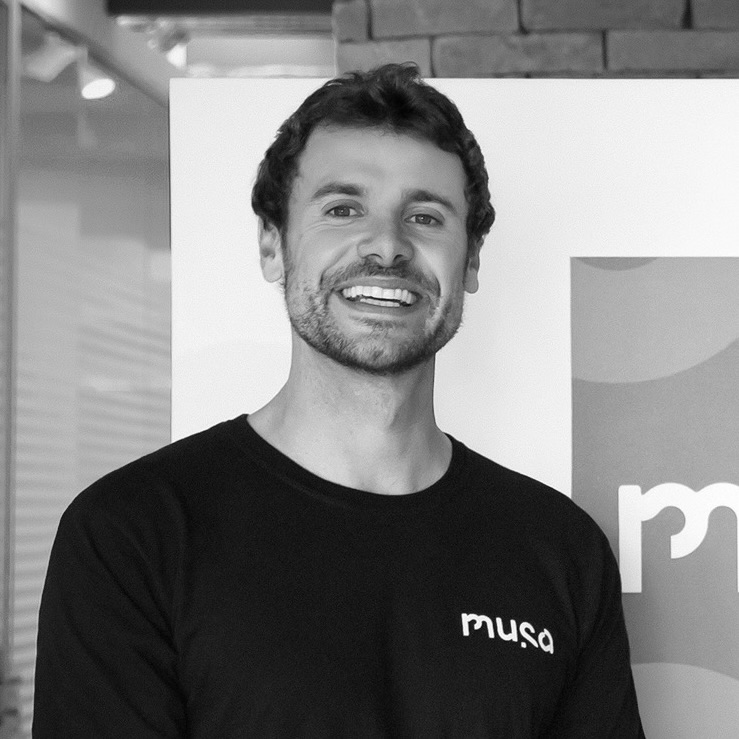
MARTIN JUNCK CEO & CO-FOUNDER
Martin previously co-founded and exited GRT Partners, a boutique financial advisory firm that served the largest corporations in Brazil.

FABRÍCIO GUIMARÃES CGO & CO-FOUNDER
Fabricio was previously Head of Digital and Media Marketing for Philips in Latam.
Brazil’s waste sector is ripe for investment
Waste 360
Brazil: newly enacted law establishes incentives to strengthen recycling production chain
Baker McKenzie
Life on Brazil’s open landfills
Atmos